

Introduction to Terrestrial Carbonate Systems and Dimension Stones
Travertine is an exceptionally versatile, terrestrial sedimentary rock that has maintained profound architectural and structural significance throughout human history. Functionally and petrographically situated in the transitional gap between highly porous, ambient-temperature tufa and fully recrystallized, high-pressure metamorphic marble, travertine represents a unique geological phenomenon. Formed primarily through the rapid chemical precipitation of calcium carbonate (CaCO₃) from geothermal mineral springs and fault-line resurgences, the stone is characterized by its distinctive vesicular architecture, featuring a network of macro-pores and micro-pores generated by the violent exsolution of carbon dioxide during lithification. In antiquity, the structural reliability and aesthetic warmth of travertine facilitated the construction of monumental edifices across the Roman Empire, including the Colosseum, aqueducts, and extensive bathhouses, establishing a legacy of durability that continues to inform modern architectural design.
Within the contemporary dimension stone industry, the Islamic Republic of Iran occupies a highly strategic and dominant position in the global supply chain of premium travertine. Iran’s vast territorial expanse encompasses some of the most tectonically active and geothermally rich geological belts on the planet, yielding immense reserves of travertine that are globally recognized for their superior physical density, unparalleled chromatic diversity, and massive block extraction capabilities. Unlike competing global suppliers—most notably Turkey and Italy, whose travertine deposits often exhibit lower bulk densities and higher porosity, restricting them primarily to tile formats—Iranian travertine possesses the requisite compressive strength and internal cohesion to be processed into expansive, load-bearing architectural slabs frequently exceeding three meters in length.
The Iranian dimension stone sector acts as a vital pillar of the nation's non-oil export economy, supported by a vast infrastructure comprising over 500 active quarries, thousands of processing centers, and an extensive network of international trade logistics. This comprehensive analysis provides an exhaustive, multi-disciplinary examination of the Iranian travertine industry. By synthesizing advanced geological and tectonic genesis models, petrographic and mechanical characterization, geomechanical optimization in quarrying, and complex global trade economics, this report elucidates the intrinsic value and future trajectory of Iranian travertine in the international market.
Note from SherkatStone: As a specialized supplier and exporter of natural stones, SherkatStone is proud to offer the finest selections of Iranian travertine—including Abbasabad White, Hajiabad Cream, Kashan Silver, and Azarshahr Red. With direct supervision from quarry extraction to advanced processing, we ensure international quality standards and seamless logistics for landmark projects worldwide.
Geological and Tectonic Framework of the Iranian Plateau
The genesis of high-quality Iranian travertine is inexorably linked to the region's exceptionally volatile tectonic evolution. Iran is geographically situated within the highly active Alpine-Himalayan orogenic belt, a massive structural deformation zone resulting from the continuous convergence and subduction of the Arabian Plate beneath the Eurasian Plate. This profound tectonic collision, which initiated in the Mesozoic and accelerated through the Cenozoic era, resulted in extreme crustal thickening and the formation of several parallel structural zones, most notably the Zagros Fold and Thrust Belt and the adjacent Urumieh-Dokhtar Magmatic Arc (UDMA).
The Urumieh-Dokhtar Magmatic Arc (UDMA)
The UDMA represents the primary geothermal and structural engine driving the formation of Iran’s most prestigious travertine deposits. Spanning approximately 100 kilometers in width, this magmatic belt traverses the central Iranian plateau along a northwest-southeast axis, stretching from the Sahand volcano in the northwestern province of Azerbaijan to the Bazman and Taftan volcanic complexes in the southeastern region of Balochistan. Geologically, the UDMA evolved as an Andean-type active continental margin, characterized by intense subduction-related volcanism and plutonism that peaked during the Eocene and Miocene epochs.
This prolonged period of magmatic upwelling saturated the continental crust with an intricate network of deep-seated thermal anomalies, granodiorite intrusions, and highly fractured fault systems. Often referred to within the geological community as the "Iranian overall onyx and travertine hot spring strip," the UDMA provides the perfect geodynamic environment for the circulation of deeply penetrating meteoric waters and the generation of localized hydrothermal systems. During the subsequent Quaternary period, the structural lineaments and transverse fault intersections within this belt acted as highly efficient vertical conduits, facilitating the rapid ascent of mineral-rich, super-heated geothermal fluids from deep crustal reservoirs to the surface.
Hydrothermal Genesis and Chemical Precipitation Mechanisms
The formation of Iranian travertine is classified predominantly as thermogene in origin, differentiating it from meteogene tufas formed by ambient-temperature surface waters. Thermogene travertine relies on carbon dioxide (CO₂) that originates from deep-seated magmatic outgassing or the thermal metamorphism of deeply buried marine carbonate rocks. As descending groundwater percolates through these extensive subterranean limestone and dolomite aquifers, it is heated by the elevated geothermal gradient of the UDMA and becomes highly saturated with dissolved CO₂ under immense hydrostatic pressure.
This pressurized, acidic environment drastically increases the solubility of the surrounding carbonate host rock, generating a highly concentrated calcium bicarbonate solution according to the following reversible chemical equilibrium:
CaCO₃ + H₂O + CO₂ ⇌ Ca²⁺ + 2HCO₃⁻
As these supersaturated hydrothermal fluids are propelled toward the surface via the UDMA's fault networks and artesian spring orifices, they encounter a sudden and extreme reduction in both hydrostatic pressure and ambient temperature. This abrupt atmospheric exposure induces immediate and violent degassing of the dissolved CO₂. Consequently, the partial pressure of carbon dioxide (pCO₂) within the fluid plummets, causing a rapid increase in the fluid's pH. To re-establish chemical equilibrium, the reaction is forced strictly to the left, resulting in the rapid, massive precipitation of solid calcium carbonate around the spring's mouth.
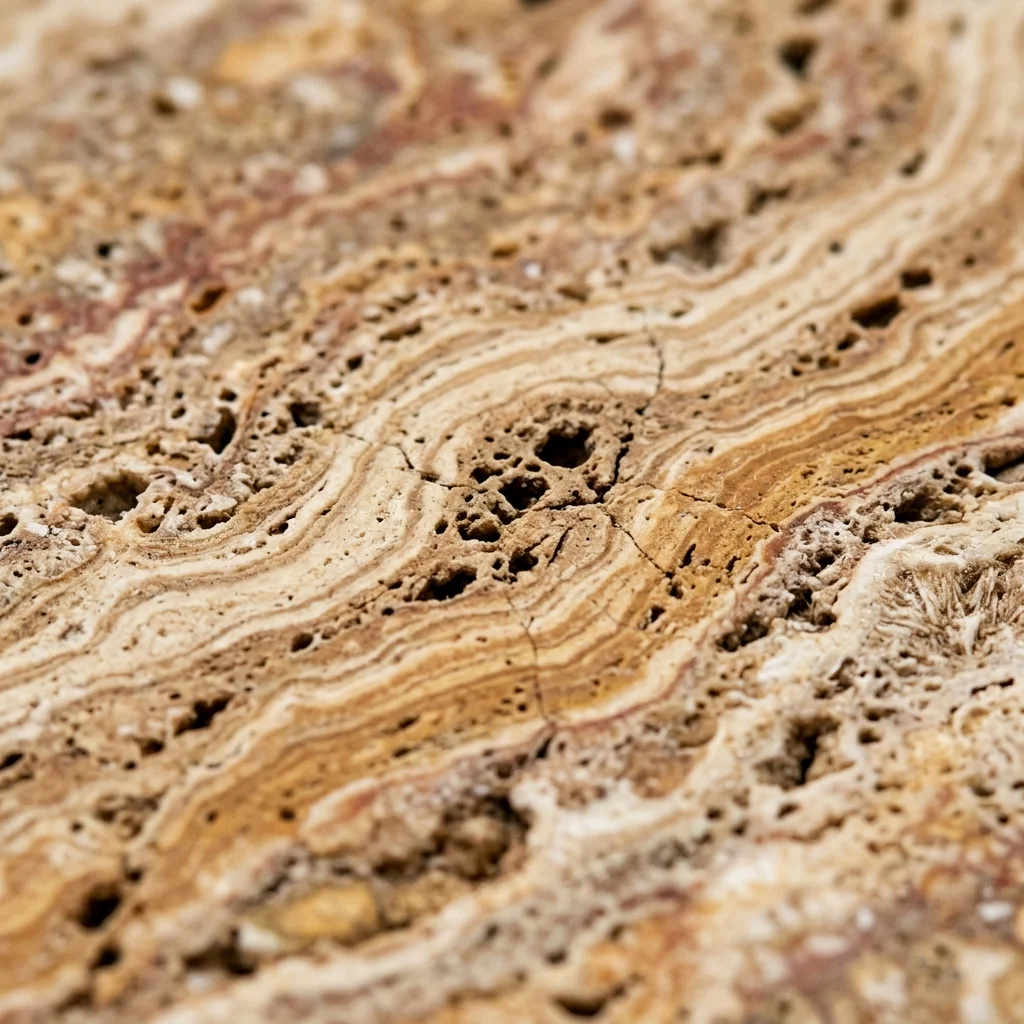
The defining structural characteristic of travertine—its vesicular porosity—is born during this exact moment of precipitation. As the CO₂ gas escapes the solution, bubbles become physically trapped within the rapidly solidifying crystalline matrix, leaving behind the characteristic macroscopic and microscopic cavities that give the stone its spongy, yet structurally rigid, texture.
Geomorphological Expressions and Archaeological Significance
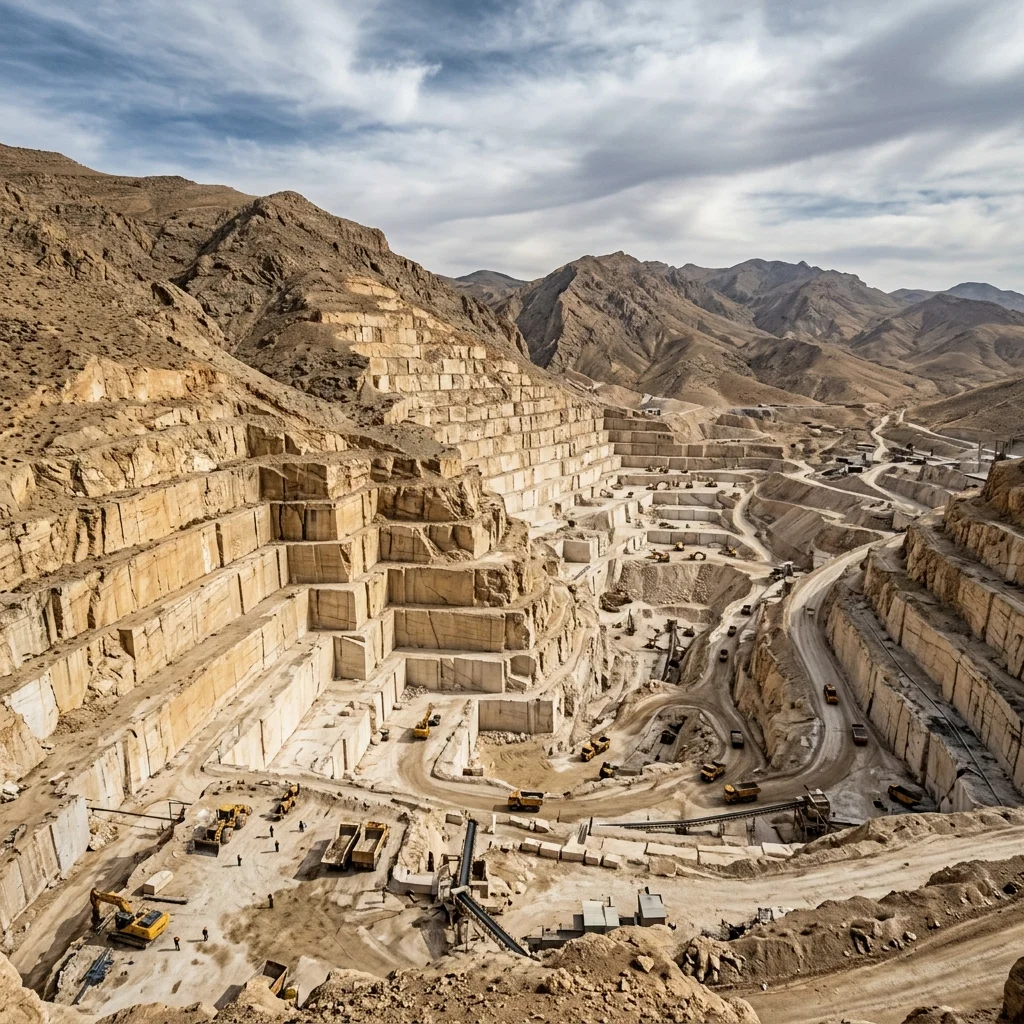
Depending on the localized topographic gradients, the hydraulic discharge rates of the springs, and the geometry of the underlying fault lines, the precipitating calcium carbonate accretes into distinct geomorphological landforms. In areas characterized by linear fault resurgences, such as the eastern flanks of the Karkas massif near Kashan and the Azarshahr region, the continuous discharge forms massive "Fissure Ridges"—steep-sided, linear mounds of densely packed travertine that exhibit progressive widening balanced by internal deposition. Alternatively, artesian springs situated on flat topography generate concentric "Spring Mounds" or domes, which can reach heights exceeding 100 meters and typically yield highly homogeneous stone blocks. On sloped terrains, the flowing mineral waters create "Cascade and Terrace Deposits," characterized by spectacular stepped barrages and waterfalls, resulting in highly laminated rock fabrics that are immensely valuable for vein-cut dimension stone processing.
Beyond their modern commercial value, these geothermal Quaternary formations possess profound archaeological significance. Recent surveys across the UDVZ (Urumieh-Dokhtar Volcanic Zone) have identified these travertine and tufa deposits as highly attractive environments for prehistoric human settlement. Hunter-gatherer societies during the Paleolithic period frequently utilized the mineral-rich, geothermal springs for heat, water, and hunting grounds. Consequently, the rapid precipitation of calcium carbonate served to encapsulate and preserve extensive assemblages of lithic artifacts and cultural materials within the travertine matrix, making these quarries vital sites for paleoanthropological research.
Mineralogical Composition and Petrographic Signatures
Petrographically, Iranian travertine is defined as a chemical sedimentary rock composed almost exclusively of carbonate minerals, distinguishing it sharply from clastic sedimentary rocks such as arkose or claystone. The primary crystalline constituent is calcite (a trigonal polymorph of CaCO₃), frequently accompanied by aragonite, an orthorhombic polymorph of the same chemical formula.
The specific ratio of aragonite to calcite within a given travertine deposit serves as a direct paleo-environmental indicator of the spring's thermal history. Aragonite preferentially precipitates in high-temperature hydrothermal environments, while calcite dominates when the emerging spring waters are cooler or have had sufficient time to cool during surface flow. Over vast geological timescales, metastable aragonite slowly recrystallizes into stable calcite, a diagenetic process that often reduces primary porosity by sealing the microscopic voids with secondary crystalline growth, thereby increasing the overall density of ancient Quaternary deposits found in Iran.
Internal Fabric and Stratification
The internal macroscopic structure of Iranian travertine generally manifests in two primary petrographic fabrics, each dictating the stone's mechanical behavior and aesthetic value:
Laminated Fabric: characterized by highly aligned, densely packed horizontal bands of crystallization. This stratification is indicative of periodic, rhythmic variations in water flow, seasonal chemistry shifts, or the colonization of the precipitating surface by thermophilic microbes, cyanobacteria, and algae, whose organic remains are entombed within the rock. The Gerdoi travertine of the Azarshahr region is a quintessential example of this highly laminated structure, which creates a distinct plane of weakness (anisotropy) but offers stunning linear visual dynamics when processed.
Massive Fabric: displays a much more homogeneous, unstratified crystallization matrix. This fabric is typical of continuous, high-volume precipitation environments where seasonal variations are negligible. The Red Travertine varieties found in the same Azarshahr region exhibit this massive fabric, resulting in distinct mechanical responses to environmental weathering compared to their laminated counterparts.
Geochemical Composition and Chromatic Diversity
While pure calcium carbonate precipitation yields a brilliant, flawless white stone—exemplified by the globally renowned Super White Travertine from the Abbasabad quarries—the vast majority of Iranian travertines exhibit an astonishing chromatic diversity. This color spectrum is entirely dependent upon the presence of trace elemental impurities, dissolved metallic oxides, and organic compounds that are incorporated into the crystalline lattice during the precipitation phase.
Comprehensive geochemical analyses of premium Iranian travertine formations, specifically those located within the Dare Bukhari and Mahallat complexes in the Markazi Province, provide a precise breakdown of the stone's elemental constituents. The matrix is overwhelmingly dominated by Calcium Oxide (CaO), which typically ranges from 55.37% to 63.43% by weight, forming the structural backbone of the calcite and aragonite minerals. Silicon Dioxide (SiO₂) is frequently present, varying dramatically from 0.08% in highly pure facies to over 21.0% in silicious interbeds, contributing significantly to the localized abrasion resistance and overall hardness of the stone. Aluminum Oxide (Al₂O₃), ranging from 0.03% to 4.37%, indicates the presence of minor clay mineral inclusions swept into the precipitation basin by surface runoff. Magnesium Oxide (MgO) is present in minor quantities (0.35% to 1.56%), suggesting slight dolomitization or the mixing of calcium-rich waters with magnesium-bearing aquifers. The parameter of Loss on Ignition (L.O.I), which typically measures around 43.85%, represents the massive volatilization of bound CO₂ and structural water when the sample is subjected to extreme analytical heating.
The presence of Iron(III) Oxide (Fe₂O₃), even in trace amounts ranging from 0.03% to 3.88%, serves as the primary chromophore responsible for the bold aesthetic variations of the stone. The profound color spectrum of Iranian travertine serves as a major commercial asset in the international architectural market. The localized concentration of iron oxide coatings and inclusions generates bold earthy tones, yielding the famous Red and Yellow travertines that are heavily concentrated in the Azarshahr and Isfahan regions. In contrast, the incorporation of fine clay particulates, trace organic compounds, and localized sulfur content yields a wide tonal range from light silver to dark titanium grey. Varieties such as Marjan Silver and Titanium Travertine are prime architectural examples of this phenomenon. Furthermore, varying concentrations of secondary minerals create the rich Beige, Cream, and Chocolate variations, which present significantly deeper and more saturated color profiles than comparable Italian or Turkish variants.
Petrophysical and Mechanical Characterization
The structural integrity, longevity, and mechanical performance of Iranian travertine are paramount to its widespread application in global, load-bearing architecture. Unlike fully metamorphosed marbles, which possess tightly interlocking mosaic crystal structures with virtually negligible primary porosity, travertine's bio-chemical origins yield highly complex, anisotropic mechanical properties that demand rigorous scientific quantification.
Porosity, Bulk Density, and Fluid Transport
Porosity is the defining petrophysical metric of travertine, dictating virtually every other mechanical property, including bulk density, compressive strength, thermal insulation, and susceptibility to environmental weathering. Fresh hot spring travertines globally exhibit a mean porosity of approximately 26%; however, the specific high-grade Quaternary facies found in Iran boast significantly lower natural void spaces due to extensive secondary crystallization over geological time.
Iranian travertine stands out in the international market for its remarkably high bulk density. While porous rocks generally suffer from low mass, the highly compacted nature of Iranian deposits yields bulk densities consistently ranging from 2.4 to 2.6 g/cm³ (equivalent to 2400 to 2600 kg/m³). This elevated density acts inversely to open porosity; higher density unequivocally predicts higher compressive strength and structural cohesion.
| Travertine Variety (Region) | Bulk Density (kg/m³) | Water Absorption (% by weight) | Uniaxial Compressive Strength (MPa) |
|---|---|---|---|
| Abbasabad White (Mahallat) | 2500 - 2600 | < 0.30 | 45.0 - 60.0 |
| Hajiabad Cream (Mahallat) | 2400 - 2500 | ~ 0.24 | ~ 50.0 |
| Azarshahr Red (East Azerbaijan) | 2490 | 1.65 | 23.4 - 50.6 |
| Dare Bukhari (Markazi) | 2520 | 0.18 | 46.8 |
| Mahallat Pink (Markazi) | 2430 - 2490 | 0.45 - 0.55 | 100.0 - 125.0 |
The uniquely low water absorption levels of premium Iranian variants—often registering below 0.3%—are highly advantageous. Fluid transport within the stone is governed by the connectivity of its capillary network. Stones with highly connected micro-pores absorb water rapidly, leading to rapid decay. The discrete, disconnected macro-pores of high-grade Iranian travertine restrict capillary water uptake, thereby greatly reducing the risk of frost damage and chemical dissolution, and ensuring long-term performance in exterior cladding.
Compressive Strength and Mechanical Anisotropy
The Uniaxial Compressive Strength (UCS) and Flexural Strength (Modulus of Rupture) of Iranian travertine are highly variable, largely dependent upon two primary factors: the specific macro-porosity of the block and the orientation of the applied mechanical force relative to the stone's sedimentary laminations. Because travertine is a layered sedimentary rock, it exhibits profound mechanical anisotropy. Forces applied parallel to the bedding planes will yield vastly different failure thresholds than forces applied perpendicular to the bedding.
Typical engineering values for standard Iranian blocks range from 45 MPa to 125 MPa, with select high-grade, highly compacted facies demonstrating failure thresholds exceeding 180 MPa. This superior density and compressive strength allow Iranian manufacturers to process the stone into expansive, large-format architectural slabs—often up to three meters in length and highly resistant to bending stresses—without compromising structural integrity. This is a formidable competitive advantage, as it is a feat rarely achievable with the lower-density, highly porous Turkish travertines, which are typically restricted to smaller tile formats to prevent rupture.
Durability, Weathering, and Freeze-Thaw Resistance
The durability of any building stone exposed to environmental stressors is heavily influenced by how fluids behave within its internal pore network. To evaluate the sustainability of Iranian travertines in harsh architectural environments, geologists subject the stone to rigorous accelerated aging tests, primarily simulating sodium chloride (NaCl) crystallization and rapid freeze-thaw cycles.
Salt crystallization is one of the primary agents of carbonate stone decay. When saline water infiltrates the stone and subsequently evaporates, salt crystals grow within the pores, exerting immense expansive pressures that cause micro-cracking and eventual crumbling. Comparative accelerated aging studies of Azarshahr travertines reveal fascinating behavioral differences based on internal fabric. Although the Gerdoi travertine features a laminated fabric—often considered a structural weakness—it maintains a significantly higher initial P-wave velocity and greater Uniaxial Compressive Strength than the massive-fabric Red travertine. As the NaCl crystallization cycles progress, both stones exhibit a gradual, progressive decline in mechanical integrity. However, non-linear decay function modeling establishes that the overall loss of structural integrity is substantially higher in the Red travertine due to its marginally higher effective porosity and greater water absorption rates, which allow deeper salt penetration. For both stones, the loss of integrity is most severely detected when measuring Brazilian Tensile Strength (BTS), which degrades at a much faster rate than compressive strength under salt stress.
Freeze-thaw resistance follows a similar thermodynamic paradigm. When water infiltrates a stone's pore network and freezes, it expands by approximately 9% in volume. In stones with highly connected, tiny capillary pores, this expansion generates immense internal hydraulic pressures that shatter the crystalline matrix. High-quality Iranian travertines, particularly those extracted from the Hajiabad and Abbasabad quarries, demonstrate excellent resilience to freeze-thaw cycles. Their lower percentage of connected micro-pores restricts initial water infiltration, while their naturally occurring, larger macro-pores act as internal expansion chambers. When water within these larger voids freezes, the ice has physical room to expand into the empty space without exerting destructive stresses against the calcite walls, thereby mitigating the disruptive forces of frost damage.
Prominent Quarries and Lithological Typologies
The vast geographical distribution of Iran’s dimension stone reserves ensures a continuous, high-volume supply of morphologically, chemically, and visually distinct travertine varieties. With an industrial infrastructure comprising over 500 active stone quarries operating nationwide, several key geological zones serve as the vanguard of the country's international export capabilities.
The Mahallat Province: The Epicenter of Premium White Travertine
Located in the Markazi Province of central Iran, the city of Mahallat and its surrounding districts are globally recognized as the undisputed epicenter of premium white and light-cream travertine extraction. The region boasts an incredibly dense concentration of approximately 70 active travertine mines and over 250 processing factories, collectively yielding tens of thousands of tons of high-grade block stone every month.
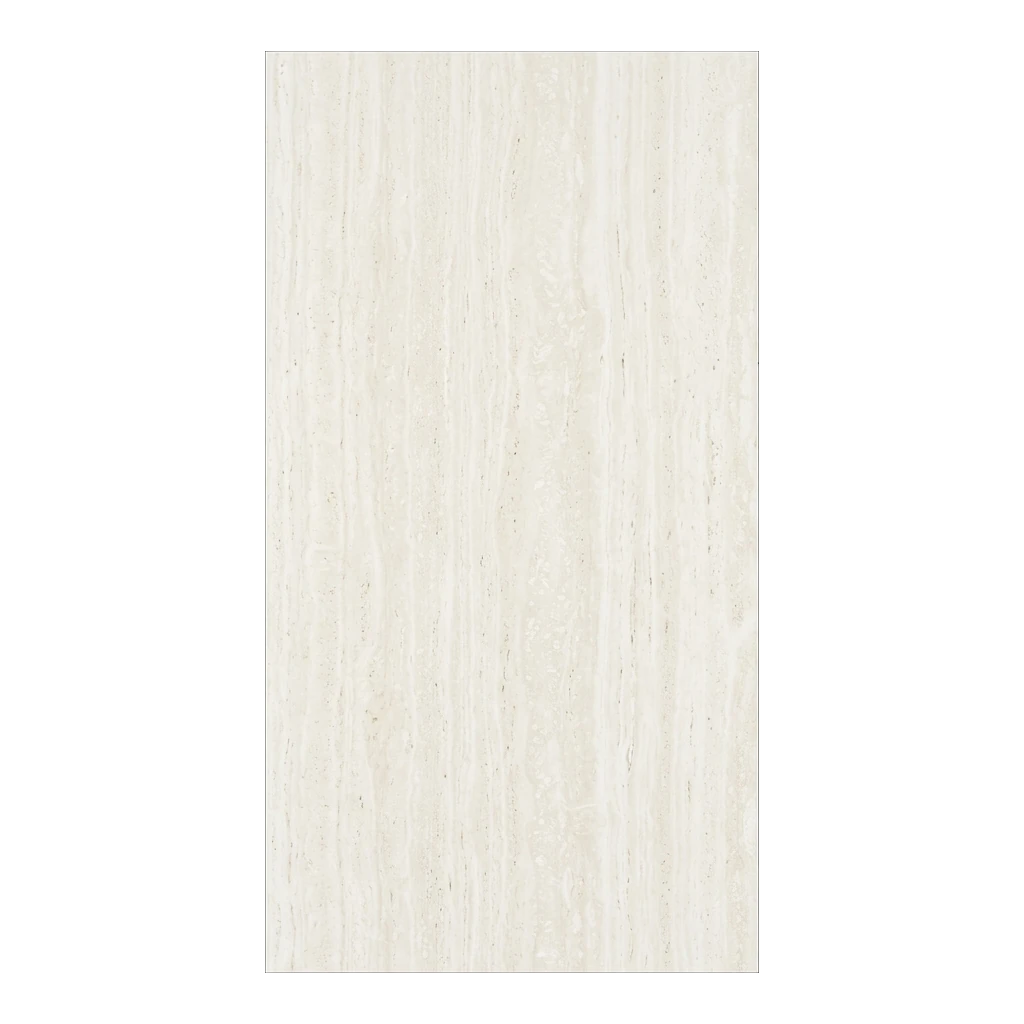
The Abbasabad Travertine quarry produces what is arguably the most coveted white travertine in the world. It is renowned internationally for its brilliant, pure white coloration, exceptionally minimal surface porosity, and immense structural density. The low degree of secondary impurities and extremely high compressive strength (averaging between 450 to 600 kg/cm²) make Abbasabad the preeminent choice for luxury facades, modern exterior cladding, and high-standard foreign architectural projects where aesthetic purity and durability are mandatory.
Adjacent to Abbasabad is the Hajiabad Travertine quarry, which yields a highly uniform color spectrum ranging from light cream to beige and deep chocolate. Hajiabad travertine is characterized by exceptionally low porosity compared to other regional sorts, translating directly into high pressure resistance, high cutability, and superior sandability. Due to its homogenous texture and ease of mechanical processing, it remains one of the most widely utilized stones for complex, heavily carved traditional "Roman-style" facades throughout the Middle East and Europe. Other notable extractions in the region include Atashkuh Travertine, distinguished by its very bright, silvery-white surface punctuated with natural, regular veining, and Mahallat Pink Travertine, highly prized for its delicate dry rose-pink base blended with ivory hues and impressive compressive strength exceeding 100 MPa.
The Azarshahr Region: Bold Chromatics and Fissure Ridges
Situated in the northwestern province of East Azerbaijan, the Azarshahr area is characterized by immense fissure-ridge travertine deposits heavily enriched with transition metals resulting from localized hydrothermal fluid variations. The most famous export from this region is Azarshahr Red Travertine, a globally rare and highly dramatic dimension stone featuring deep rusty-orange to blood-red backgrounds intersected by stark white and golden veining. Its bold aesthetic is accompanied by an isotropic massive fabric that provides excellent abrasive wear resistance and thermal stability.
Furthermore, the region produces Azarshahr Lemon (or Walnut) Travertine, which features a distinctive vibrant yellow to lemon hue, occasionally exhibiting a white crystalline halo. This specific lithology exhibits lower porosity than average regional travertines, granting it a high degree of durability, excellent abrasiveness, and making it structurally suitable for both highly trafficked interior statement floors and robust outdoor paving applications.
Central Iran: Isfahan, Varton, and Modern Neutrals
The central quarries, particularly those situated around the city of Isfahan and the Varton region, are instrumental in supplying modern, neutrally-toned dimension stones that align with contemporary, minimalist architectural trends. Iranian Silver and Titanium Travertine, deeply concentrated in these areas, are celebrated for their highly refined, transparent veins sweeping through a light grey to dark silver background. Commercially, varieties like Marjan Silver and Black Travertine fall into this broad export category, offering designers a sophisticated, monochromatic palette combined with excellent technical performance.
Additionally, the Petro Travertine quarry in Isfahan exemplifies the scale of Iranian operations. Extracted from a site with proven reserves exceeding 600,000 tons over a two-square-kilometer area, Petro Travertine offers a highly stable, beige material. Its sheer abundance and stable geological structure are highly valued for massive, large-scale, repetitive architectural developments that require strict, long-term batch and color consistency over multi-year construction phases.
Advanced Extraction Mechanics and Geotechnical Engineering
The commercial viability and global dominance of Iranian travertine are heavily underpinned by highly sophisticated, mechanized extraction methodologies. Historically, quarry operations were severely limited by rudimentary explosive fracturing techniques that yielded unpredictable block geometries, induced massive micro-cracking within the stone, and generated unacceptable levels of unmarketable waste. Modern Iranian quarries have entirely transitioned to automated Diamond Wire Sawing, representing a paradigm shift in geomechanical extraction.
Optimization Dynamics of Diamond Wire Sawing
Diamond wire cutting is a continuous-loop abrasive machining process. It utilizes a high-tensile steel wire embedded with evenly spaced, sintered diamond beads, driven by a powerful motorized pulley system to slice precisely through massive, in-situ bedrock. The operational efficiency, speed, and cost-effectiveness of this system are dictated by a highly complex array of kinematic and dynamic variables, including wire tension, linear peripheral velocity, specific cutting energy, machine thrust force, and bead density.
Empirical geotechnical research conducted across various Iranian travertine operations, most notably detailed studies at the Targh travertine quarry, has established rigorous scientific optimization protocols for maximizing diamond wire performance under field conditions. Engineers evaluate the Specific Cutting Energy—defined as the exact amount of mechanical energy required to cut a single unit area of solid rock—to predict and control operational costs.
Block Size and Surface Area Parameters: The highest cutting rates and the lowest specific bead consumption (tool wear) are achieved when extracting fairly large blocks with cutting surfaces measuring strictly between 50 and 70 square meters. Deviations from this optimal geometric size negatively impact bead longevity and introduce harmonic vibrations that reduce machine efficiency.
Amperage and Feed Rate Dynamics: The relationship between the cutting machine's pullback amperage (the thrust force pulling the wire through the rock) and the actual cutting rate is highly complex and non-linear. For massive surface areas, a higher pullback amperage directly and linearly correlates with an increased cutting rate. Conversely, for smaller blocks, increasing the amperage yields strongly indirect, detrimental effects due to excessive localized friction, overheating at the bead-workpiece interface, and severe bead binding.
Optimal Tool Assembly and Bead Density: The physical composition of the cutting tool must be precisely calibrated to the rock's hardness. For slicing Quaternary carbonate rocks such as Iranian travertine, the statistically proven optimum assembly utilizes exactly 31 sintered diamond beads per meter of wire. A higher bead density causes clogging with rock slurry, while a lower density results in rapid diamond degradation.
Spatial Positioning and Tension Calibration: The physical distance between the driving machine and the working face must be modulated based on the cut size: 3 meters for small blocks, 3.5 meters for medium cuts, and 4 meters for massive extractions. Furthermore, wire tension must be dynamically modulated by the operator, maintaining values between 45 and 65 Amperes. Higher tension is strictly assigned to smaller blocks, while tension is progressively reduced for larger volumetric cuts to prevent sudden wire fatigue and catastrophic rupture.
Impact Angle Kinetics: Laboratory investigations into the interaction between the diamond beads and the travertine matrix dictate that establishing a 15-degree angle of impact between the wire and the rock face yields the absolute lowest specific energy consumption. Increasing this angle to 25 degrees maximizes energy waste, drastically lowers efficiency, and accelerates tool wear.
Through strict adherence to these geomechanical parameters, Iranian travertine quarries have successfully maximized block yield, entirely eliminated explosive micro-cracking, minimized material waste, and maintained highly competitive extraction costs, thereby facilitating high-volume, low-defect international export.
Industrial Processing, Resin Technologies, and Waste Valorization
Upon successful extraction, raw travertine blocks—often weighing upwards of 20 to 25 tons—are transported via heavy logistics networks to advanced, high-tech processing centers. Here, they undergo multidimensional fabrication to transition from rough geological specimens to refined, luxury architectural surfaces.
Vein-Cut versus Cross-Cut Processing Mechanics
The initial and most critical processing decision is the orientation of the primary cut relative to the rock's natural geological bedding planes. This orientation fundamentally alters both the visual texture and the structural mechanics of the finished slab.
Vein-Cut processing: the multi-wire or gang saw blade slices vertically, parallel to gravity and strictly perpendicular to the natural horizontal sedimentary layers. This technique exposes the distinct, parallel linear banding of the hydrothermal deposition, creating a sweeping, directional flow. Vein-cut processing is highly favored for Book-Match and Four-Match symmetrical installations, utilizing the high density of Iranian Titanium and Silver travertines to create massive, continuous visual statements in luxury lobbies.
Cross-Cut processing: involves slicing horizontally, directly parallel to the sedimentary bedding layers. This completely obscures the linear bands, revealing the tops of the CO₂ bubbles and yielding an organic, cloud-like, and mottled aesthetic devoid of straight lines, highly valued for seamless, expansive floor paving.
Advanced Resin Impregnation and Surface Stabilization
To mitigate the inherent vulnerabilities of travertine's porous structure—namely the accumulation of dirt, liquid absorption, staining, and severe freeze-thaw susceptibility—industrial processing lines employ highly advanced vacuum-assisted resin impregnation technologies.
Once the raw slabs are cut and calibrated for thickness, they are dried and flooded with high-performance, low-viscosity epoxy or transparent nano-resins. The vacuum environment removes trapped air from the stone's macro-pores, forcing the liquid polymer deep into the micro-fissures and internal voids. Once cured, this resin creates a permanent, internal structural bond that vastly increases the modulus of rupture, flexural strength, and impact resistance of the slab, often supplemented by the application of a fiberglass reinforcement mesh adhered to the back of the panel. Modern nano-resins utilized in premium Iranian factories are specifically engineered for superior UV stability, preventing the long-term yellowing degradation traditionally associated with older polyester fillers, thereby allowing the treated stone to be utilized safely and permanently in high-exposure exterior facades.
Following structural stabilization, the resin-filled stone is subjected to various abrasive surface treatments dictated by contemporary architectural demands. Multi-stage diamond abrasive grinding achieves a high-gloss Polished finish that maximizes reflectivity and color depth. A Honed finish provides a smooth but matte surface, eliminating glare and reducing slip hazards. For exterior applications, Tumbled and Brushed techniques use mechanical distressing and abrasive wire-brushing to erode the softer carbonate material between the harder veins, creating an antique, highly textured, slip-resistant surface ideal for pool decks. Lastly, Split-Face processing utilizes hydraulic guillotines to snap the stone, leaving raw, fractured edges utilized to create three-dimensional, acoustic-dampening decorative wall cladding.
Environmental Valorization: Travertine Sludge Recycling
The massive scale of Iranian stone cutting generates significant volumes of travertine sludge—a highly alkaline, water-dense slurry comprising microscopic calcium carbonate particles and cutting fluids. Historically viewed as an environmental liability, advanced materials science has successfully repurposed this waste into a highly valuable industrial resource.
Research indicates that dehydrated travertine sludge possesses excellent pozzolanic and non-pozzolanic properties, making it a highly viable, eco-friendly substitute for Portland cement in concrete mix designs. Experimental formulations have demonstrated that substituting up to 30% of cement weight with travertine sludge initially reduces 7-day compressive strength, but significantly enhances both the 28-day and 90-day compressive and flexural strengths of the concrete due to secondary pozzolanic reactions. Crucially, the incorporation of these ultrafine travertine particles drastically improves the self-compacting properties and freeze-thaw resistance of the resulting concrete, reducing overall energy consumption and greenhouse gas emissions associated with traditional cement manufacturing, and creating a perfectly circular economy within the Iranian construction materials sector.
Global Trade Economics and Export Dynamics
The synergistic combination of extreme geological abundance, superior structural density, and the optimization of high-tech industrial processing has firmly elevated the Islamic Republic of Iran to the upper echelons of the global dimension stone trade. Iran's immense reserves, coupled with its highly scalable production capacity, render it an indispensable structural pillar in international B2B architectural procurement and supply chain management.
Macro Export Volumes and Trade Balance
Comprehensive global trade statistics for the year 2024 provide a detailed view of Iran's dominant market position. Operating under the Harmonized System (HS4) classification Code 25.15—which encompasses Marble, Travertine, and Alabaster—the Iranian export market achieved a total outbound valuation of $91.4 Million. This immense volume positions Iran as the 4th largest exporter of these dimension stones globally, out of 127 reporting nations, capturing a commanding 5.02% share of the entire worldwide export market. Within the domestic economy, these dimension stones rank as the 25th most exported product out of over 1,000 classified Iranian export commodities.
Concurrently, Iran maintains a highly insular domestic market regarding dimension stone imports. In 2024, the nation imported a mere $1.92 Million of HS4 25.15 products, primarily sourced from Turkey ($988k) and Greece ($672k). This vast disparity between outbound shipments and inbound consumption allows the Iranian stone sector to maintain an overwhelmingly positive and highly lucrative net trade balance of $89.4 Million, injecting vital foreign capital into the national economy.
Target Markets and Strategic Destinations
The outward flow of Iranian travertine is strategically directed toward both established global industrial manufacturing centers and rapidly emerging architectural markets. The dominant export destinations for 2024 highlight a complex web of international reliance on Iranian geological resources:
| Export Destination | 2024 Export Value ($ USD) | Market Dynamics, Trends, & Strategic Importance |
|---|---|---|
| China | $78.1 Million | The primary consumer, accounting for an overwhelming majority (>85%) of all Iranian exports in this sector. China primarily imports raw, unprocessed travertine blocks, leveraging its own vast industrial infrastructure to process the stone for global re-export. The market experienced a slight decline (-4%) from 2023. |
| Italy | $7.35 Million | Representing the fastest-growing market for Iranian stone, expanding by a massive +16.5% (+$1.04M) between 2023 and 2024. Italy is a high-value market demanding premium white and silver blocks to supplement its own depleting domestic reserves. |
| Turkey | $2.32 Million | Serves paradoxically as both Iran's primary global competitor (exporting over $640M in total dimension stones) and a major consumer. Turkey frequently imports unique Iranian colorations (e.g., Azarshahr Red and specific Silver tones) that are geologically unavailable in Turkish quarries, processing them for European distribution. |
| Spain | $710,000 | Represents steady, reliable European demand for high-quality, dense architectural cladding used in Mediterranean-style residential and commercial developments. |
| Chinese Taipei | $653,000 | Highlights an emerging Asian market demanding finished slabs and premium aesthetic materials. |
Furthermore, the data indicates rapidly accelerating demand in secondary markets, with exports to Kazakhstan growing by +$228k and Lebanon by +$179k, suggesting a successful Iranian strategy to diversify its client base beyond the massive Chinese sink. Advanced predictive economic modeling indicates significant unmet export growth potential remaining in neighboring markets, most notably India, which harbors a +$1.13M potential for further integration of Iranian stone, and further direct integration into the Turkish manufacturing sector representing a +$952k potential upside.
Pricing Mechanisms and Competitive Positioning
Pricing in the international travertine market is highly elastic and rigorously governed by block purity, structural density, format size, and the efficiency of global supply chains. Standard Iranian travertine blocks, such as generic Beige or standard Red variants, are highly competitive, trading at Free On Board (FOB) prices ranging broadly between $80 and $180 per metric ton.
In stark contrast, premium, low-porosity, high-density white variants—most notably those extracted from the highly prized Abbasabad quarry—command extreme market premiums. Due to their scarcity, flawless aesthetic, and superior physical properties, these blocks frequently secure baseline export prices of $280 per metric ton (EXW), generating immense localized profit margins for the Markazi province operators.
To continually facilitate and expand this massive commercial enterprise, the Iranian government and private sector consortiums routinely host massive domestic trade exhibitions. Industrial events such as the Iran International Stone Exhibition in Mahallat showcase over 40,000 tons of rough block stone, sourced directly from 500 distinct quarries across 27 provinces, presenting the nation's geological wealth directly to international buyers and drastically streamlining the global B2B procurement process.
Strategic Conclusions and Future Outlook
The comprehensive analytical data unequivocally indicates that the Iranian travertine industry is uniquely positioned for sustained, multi-decadal growth, provided the sector continues to strategically leverage its intrinsic geological advantages—namely, the unparalleled high density and the vast, unique chromatic diversity of its native reserves.
However, to maximize future economic valuation, the sector must urgently confront the structural dichotomy between exporting raw, unworked blocks versus producing and exporting value-added, finished architectural slabs. Currently, the overwhelming dominance of raw block exports to the Chinese manufacturing sector ($78.1M) represents a significant bottleneck in Iran's economic complexity. The Product Complexity Index (PCI) for HS4 25.15 currently sits at a remarkably low -1.23, indicating that the export of raw stone contributes minimally to the nation's advanced industrial and technological development.
By heavily redirecting capital investment toward localized, high-tech processing infrastructure—including the mass deployment of advanced multi-wire gang saws, fully automated vacuum resin impregnation lines, and precision CNC surface calibration robotics—Iranian exporters can retain the highly lucrative processing profit margins currently being absorbed by foreign manufacturing hubs in China and Italy.
Concurrently, the integration of rigorous sustainable practices, specifically the mass recycling of travertine sludge into pozzolanic cements for domestic construction, will sharply reduce the environmental footprint of the quarrying sector. This practice not only mitigates waste disposal costs but simultaneously yields high-durability, eco-friendly concrete byproducts with advanced freeze-thaw resistance, modernizing Iran's broader civil engineering materials sector.
Ultimately, the unparalleled geological density generated by the hydrothermal systems of the Urumieh-Dokhtar Magmatic Arc, combined with a virtually unmatched color spectrum and the relentless optimization of extraction technologies, ensures that Iranian travertine will remain an indispensable asset within the luxury echelons of the global dimension stone market. By successfully executing a strategic shift toward value-added slab exportation, targeting the rapidly growing architectural demands of Europe, the Middle East, and emerging Asian markets, the Iranian stone industry has the fundamental capacity to solidify its absolute global dominance well into the twenty-first century.